
If you've been digging into hedge fund history, you've probably stumbled across the name Adam Weiss. He's not a household name like Ray Dalio or Bill Ackman but within the long/short equity world, his track record speaks for itself.
This isn't just a career summary. It's an honest look at what made his approach work, why he walked away at the top, and what investors can actually learn from it.
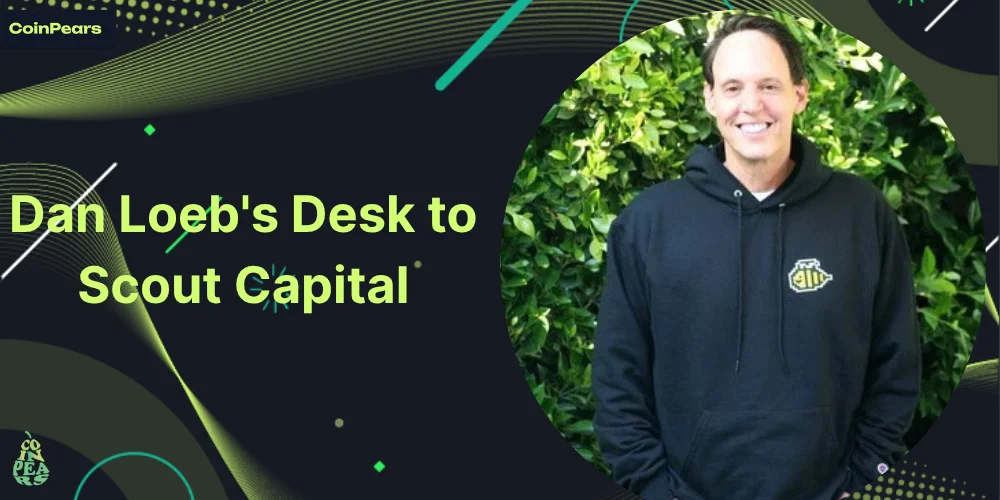
From Dan Loeb's Desk to Scout Capital
Weiss didn't come out of nowhere. Before launching his own fund, he worked as a research analyst at Dan Loeb's Third Point one of the most aggressive activist hedge funds in the business.
That background matters. Third Point sharpened Weiss on finding mispriced situations and understanding what the market was getting wrong. But Weiss would later take a different direction less confrontational, more concentrated.
In 1999, he co-founded Scout Capital Management alongside James Crichton, who brought experience from Donaldson, Lufkin & Jenrette and Zweig-Dimenna Associates. New York-based, long/short equity focused, and built around a simple idea: find great businesses the market fundamentally misunderstands.
 What Scout Capital Actually Did
Scout wasn't chasing trends or riding momentum. The firm made concentrated investments in high-quality businesses it believed were misunderstood and incorrectly valued focusing on a small number of industries and geographies where it had developed particular insight.
That's the key word: concentrated. This wasn't a diversified fund spreading bets across 200 names. Scout took real conviction positions, which is exactly what separates long-term alpha generators from index-huggers.
The results backed it up. Scout Capital beat the S&P 500 consistently by an average of 12% per annum for fifteen years. And in 2013 alone a year when most hedge funds struggled to keep pace with the bull market Scout returned 21%.
That's not luck. That's a repeatable process working exactly as designed.
Why He Walked Away at the Peak
Here's what makes Weiss unusual: he quit when he was winning.
In early 2014, Scout Capital then managing $6.7 billion announced it would shut down after Weiss decided to step back from managing outside money. The fund returned 95% of client capital by April 1.
A Scout letter to clients reportedly said: "After much soul searching, Adam has decided to step back from the management of outside capital."
Most fund managers don't leave like this. They either blow up, fade out, or ride it until they can't. Weiss chose a third option a clean exit on his own terms. He reportedly wanted to write a book on investing and run a family office instead. That tells you something about his priorities.
Stillwater: The Smaller, Leaner Second Act
It didn't take long for him to come back just on different terms.
In 2014, Weiss founded Stillwater Investment Management, a California-based long/short equity hedge fund headquartered in Palo Alto. The intention was clear: run something smaller, simpler, and faster than the giant Scout had become.
At Stillwater, Weiss hunted for high-quality companies going through a period of change that were fundamentally misunderstood by the market while also actively looking for attractive shorts.
One notable short thesis from the Stillwater era was against activist investors themselves. Weiss argued that over-activism was actually destroying value in certain companies a contrarian call in an era when activist hedge funds were treated like market heroes.
Weiss held more than 75% ownership in Stillwater and served as Chief Investment Officer. Stillwater's early portfolio included names like PayPal, Apple, Comcast, and Yum Brands consumer and tech plays fitting the "misunderstood quality business" playbook.
Also Read: BTFD Meaning: What It Is and When It Actually Works
The Investment Edge
So what was the actual edge?
Three things stand out across both Scout and Stillwater:
Concentrated bets on quality at inflection points not cheap junk, but great businesses temporarily misread by the market
Genuine short conviction using the short book as a real alpha source, not just a hedge
Willingness to walk away from positions, from the fund itself, from outside capital when it no longer made sense
The last one is underrated. Most managers stay too long because fees and ego keep them in the seat. Weiss exited Scout at $6.7B AUM and 21% returns in the prior year. That discipline is rare.
What Investors Can Learn From This
A lot of people search for Adam Weiss because they're trying to understand what a genuinely good hedge fund manager looks like not the flashy ones, but the ones with real 15-year track records.
The lesson isn't to copy his positions. It's the framework:
Focus beats diversification when your conviction is grounded in real research
Shorting activism is a legitimate thesis when the market is overvaluing a trend
Knowing when to stop is itself a form of risk management
Scout compounded at 14% annually from 1999 to 2014 through the dot-com crash, 9/11, the 2008 financial crisis, and the recovery. That's the kind of all-weather performance that only comes from process, not luck.
FAQ
What was Adam Weiss known for in the hedge fund world?
Running Scout Capital for 15 years with a 14% annualized return then walking away voluntarily at the top.
Why did Scout Capital close in 2014?
Weiss chose to step back from managing outside money to pursue a family office and personal writing projects.
What is Stillwater Investment Management?
A smaller long/short equity fund Weiss launched in Palo Alto in 2014, focused on quality businesses at inflection points.
How did Scout Capital's returns compare to peers?
Scout beat the S&P 500 by roughly 12% per year on average a margin very few long/short funds sustain for that long.
Is Adam Weiss still active in fund management?
His LinkedIn lists him as retired Stillwater's last SEC filing was in 2017, suggesting the fund has since wound down.
Bottom Line
Adam Weiss isn't the loudest name in hedge fund history and that's kind of the point. No blow-ups. No activist drama. No late-career fading. Just a clean 15-year run at Scout, a disciplined second act at Stillwater, and a voluntary exit before things got messy.
For anyone studying long/short equity or trying to understand what sustainable alpha actually looks like, his career is one of the better case studies out there.